
ARTICLE
“900점 이상 1100만원” 거래 현행범, 교토대학교 대학원생
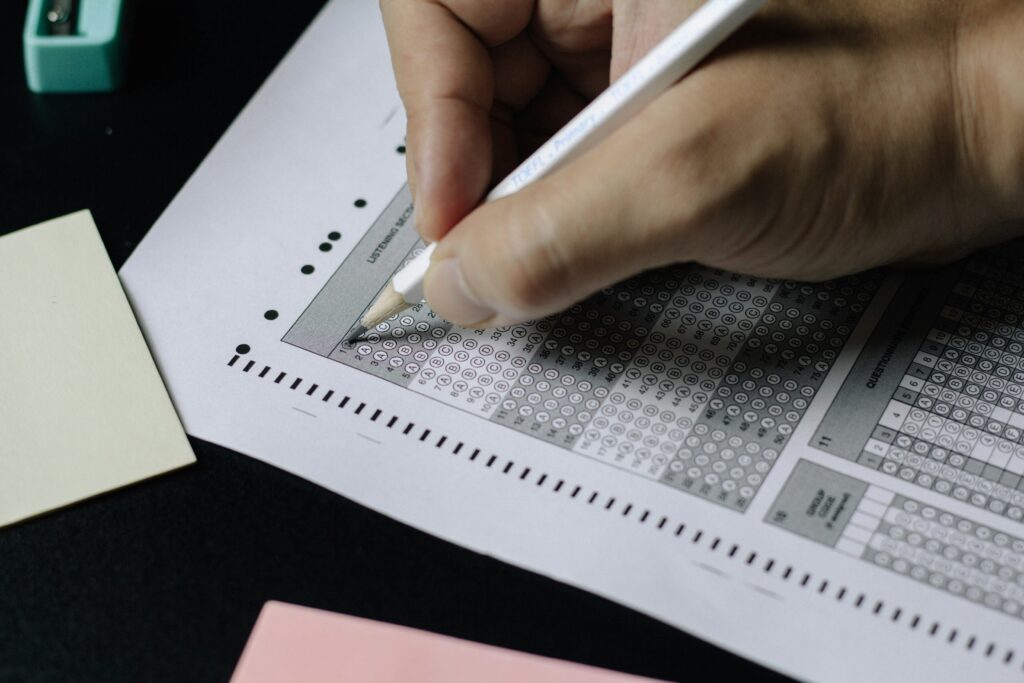
최근 일본에서 유명한 대학 대학원에 다니던 중국인 유학생이 토익(TOEIC) 대리시험을 치르다가 경찰에 잡혔다. 대리시험은 다른 사람 대신 시험을 보는 것이다. 그때 그가 잡히자 시험장에서 시험을 보던 사람 30%가 시험을 그만두고 나갔다. 그래서 조직적인 범죄일 가능성이 나왔다.
22일 일본 ANN 뉴스에 따르면 도쿄도 이타바시구의 한 토익 시험장에서 일이 일어났다. 중국 국적의 교토대 대학원 2학년생 왕(27) 씨가 다른 사람 이름으로 만든 수험표(시험을 볼 때 필요한 표)로 시험을 치르다가 경찰에 잡혔다.
토익 평가기관(시험을 만들고 관리하는 곳)은 경찰에 신고했다. “한 사람이 매번 다른 이름으로 시험을 보고 있다”고 말했다. 그 사진 속 수험자는 모두 900점 이상 높은 점수를 받았다.
경찰은 왕 씨가 시험을 볼 예정이었던 시험장에서 기다렸다. 그리고 그를 현행범으로 잡았다. 현행범은 범죄를 저지르는 현장에서 잡힌 범인이다.
왕 씨가 잡힐 때 쓰고 있던 마스크 안에는 작은 마이크가 있었다. 그 마이크는 3~4cm 크기였다. 왕 씨가 먼저 시험을 치르고 공범에게 답을 알려준 것 같다. 공범은 함께 범죄를 저지른 사람이다.
실제로 공범으로 의심되는 사람도 많이 있었다. 왕 씨가 경찰에 잡히자 그 시험장에서 시험을 보던 사람 중 30%가 시험을 포기하고 나갔다.
왕 씨는 경찰에게 이렇게 말했다. “돈이 필요해서 아르바이트를 찾고 있었다. 그때 영어 시험을 치르면 돈을 주겠다는 제안을 받았다.”
이전 다른 시험에서도 비슷한 일이 있었다. “중국인이 중국어로 혼잣말하면서 이상하게 정확한 답을 고르고 있다”고 시험 감독관(시험을 지켜보는 사람)이 신고했다.
뉴스에 따르면 중국어로 된 ‘불법 시험 대행 웹사이트’도 있다. 이 사이트에서는 대리 시험을 칠 일본에 사는 중국인을 모집한다. 그리고 이용자도 찾는다.
ANN이 연락한 한 업체는 이렇게 말했다. “900점이 넘으려면 118만엔(약 1140만원) 정도 든다. 신분증 확인은 우리가 해결한다. 점수는 확실하다.” 그리고 “일본이 가장 토익 대리시험을 치르기 쉽다. 이 서비스는 일본에서만 한다”고 말했다.
SUMMARY
🗞 What’s the Scoop?
A Chinese graduate student at prestigious Kyoto University got caught red-handed running a sophisticated TOEIC cheating operation in Japan. Wang, 27, was arrested mid-exam with a tiny microphone hidden in his mask, apparently broadcasting answers to accomplices. But here’s where it gets wild: the moment police cuffed him, 30% of the entire test center suddenly abandoned their exams and fled. Talk about a smoking gun.
The scam was lucrative – brokers were charging over 10 million won (roughly $8,000 USD) for guaranteed 900+ scores. Wang claimed he was just a broke grad student looking for part-time work, but investigators discovered an entire ecosystem of proxy test-takers, fake IDs, and organized crime. The Chinese-language websites advertising these services specifically marketed Japan as the “easiest place” to cheat on TOEIC exams.
What started as one suspicious test-taker caught the attention of ETS (the testing organization) when they noticed the same person kept showing up in photos but with different names – all scoring 900+. It’s like academic fraud meets identity theft, wrapped up in East Asia’s obsessive relationship with standardized test scores.
👥 Who’s Involved?
Wang (27): Chinese Kyoto University graduate student turned proxy test kingpin. Claimed financial desperation drove him to work for a cheating syndicate that paid him to take tests for other people.
The Fleeing 30%: When Wang got arrested, nearly a third of test-takers immediately gave up and left. These weren’t random panicking students – they were likely part of the same organized network.
Chinese Brokers: Operating Chinese-language websites offering “TOEIC proxy services” with different pricing tiers. Premium packages promised 900+ scores for over $8,000, complete with forged identity documents.
Desperate Test-Takers: The clients were reportedly working professionals, graduate school applicants, and job seekers willing to pay massive sums rather than study.
🔀 What Changed?
This scandal exposed how TOEIC cheating has evolved from simple answer-copying to international organized crime. The sophistication is staggering – micro-technology, forged documents, cross-border coordination, and systematic exploitation of testing security gaps.
More importantly, it revealed the toxic pressure cooker that standardized English testing has become across East Asia. When graduate students at top universities are running criminal enterprises just to help people fake English proficiency, something is deeply broken in the system.
⚖️ Why It Matters
This story resonated so strongly in Korean media because it hits a raw nerve about the TOEIC industrial complex that dominates Korean professional life. In Korea, your TOEIC score isn’t just a nice-to-have – it’s often a hard requirement for graduation, employment, and career advancement.
Korean universities require TOEIC scores to graduate (105 out of 189 universities mandate it), major corporations use it as a hiring filter, and even government positions demand high scores. The test has become such an obsession that Korean job seekers often refer to TOEIC as essential “스펙” (specs) – an umbrella term for basic qualifications & extracurricular experience just to be considered human in the job market.
Korean readers saw this Japanese scandal and recognized their own society’s dysfunction. Online forums and job sites are filled with Koreans debating whether TOEIC is actually useful or just an expensive gatekeeping ritual. Some dismiss it as meaningless busy work (“토익 장사로 돈 벌어먹는 학원만 좋을뿐” – “only cram schools profit from the TOEIC business”), while others acknowledge it’s an unfortunate necessity in the current system.
The fact that this criminal network specifically targeted Japan as the “easiest” place to cheat also struck a chord. It suggests that Korea’s TOEIC security might actually be tighter than Japan’s – a subtle point of national pride buried in an otherwise embarrassing regional story about academic fraud.
For Korean audiences, this wasn’t just foreign news about test cheating. It was a mirror reflecting their own society’s brutal educational competition, the commodification of English proficiency, and the lengths people will go to game a system that everyone knows is broken but nobody seems able to fix.
CONTEXT & COMMENTARY
📊 TOEIC as East Asia’s Professional Passport
In East Asia, TOEIC scores function less like language assessments and more like social sorting mechanisms. Korea exemplifies this perfectly: over half of four-year universities require TOEIC scores just to graduate, hundreds of companies use cutoff scores for hiring, and government positions often mandate specific minimums. It’s not about communication ability – it’s about demonstrating you can jump through the right hoops.
This creates a perverse dynamic where test-taking strategy becomes more valuable than actual English fluency. Korean students spend millions of won and countless hours drilling TOEIC-specific techniques rather than developing real language skills. The result? High TOEIC scores with embarrassingly low actual English proficiency – a phenomenon so common it has become a national joke.
🔥 The Pressure Cooker Effect
Korea’s hyper-competitive job market transforms TOEIC from an assessment into a survival tool. When major corporations like Samsung or LG filter résumés based on TOEIC scores before human eyes ever see them, the test becomes a gatekeeper to middle-class life. This isn’t hyperbole – it’s documented policy at hundreds of Korean companies.
The psychological pressure is immense. Korean online forums are filled with anxiety-ridden posts about TOEIC scores determining career trajectories. Some estimate they’ve spent over 5 million won ($4,000 USD) and years of their lives pursuing scores that may have little correlation with job performance. The desperation that drives people to organized crime starts making sense.
🌐 Regional Academic Fraud Networks
This Japanese scandal reveals sophisticated criminal enterprises exploiting East Asia’s test-obsessed culture. The networks aren’t just local – they’re international, with Chinese operators, Japanese test sites, and likely Korean clients. Previous Korean cases involved similar patterns: fake IDs, proxy test-takers, and clients paying millions of won for high scores.
What’s particularly striking is how normalized this has become. Korean news archives show regular TOEIC fraud busts involving everyone from foreign language company employees to Seoul National University students. The fact that 30% of a Japanese test center fled when one person got arrested suggests these networks have achieved serious scale.
💰 The English Education Industrial Complex
Korea spends more per capita on private English education than almost any country on Earth. The hagwon (cram school) industry built around TOEIC prep alone generates billions of won annually. This creates powerful economic incentives to maintain the current system, even when educators privately acknowledge its dysfunction.
The irony is profound: a country desperately trying to improve English proficiency has created a system that often undermines actual language learning in favor of test optimization. Korean companies complain about employees with high TOEIC scores who can’t hold basic English conversations, yet they continue using TOEIC as a hiring criterion.
This Japanese scandal serves as a funhouse mirror for Korean society – revealing how an admirable desire for English proficiency has warped into a dysfunctional test-obsessed culture that breeds fraud, anxiety, and educational distortion on an industrial scale.
STUDY GUIDE
한자
中
가운데 중
Overview
The name of the character 中 is 가운데 중, which conveys that its meaning is 가운데 (middle, center) and its reading is 중.
The character 中 depicts a banner or flag 丨 planted directly in the center of a military camp 口.
In The News
China has called itself some variation of 중국 (中國), meaning “The Middle Kingdom”, for over 2,000 years. Chinese civilization has seen itself as the “center” of all civilization. Korean news uses 中 as shorthand for the People’s Republic of China because it’s the first character of China’s actual name for itself: 중화인민공화국 (中華人民共和國).
This is a form of metonymy – like using “Washington” to mean “the US federal government” or “the White House” to represent the current presidential administration as a whole. The part (中) represents the whole (China), but it’s not arbitrary – it comes from the name of the country.
Examples
- 中 정부 = Chinese government
- 中 기업 = Chinese companies
- 中 관광객 = Chinese tourists
- 中 경제 = Chinese economy
In This Article
中 남성, meaning “a Chinese man,” is the term used to describe Wang, the Kyoto University graduate student caught up in the TOEIC cheating scandal.
日
날/해 일
Overview
The name of the character 日 is 날 일 or 해 일, which conveys that its meaning is 날 (day) or 해 (sun) and its reading is 일. The character 日 originally depicted a circle with a dot in the center – a literal picture of the sun. Over centuries of writing, that circle got compressed into a rectangle, but you can still see the original solar design.
In The News
Japan calls itself 일본 (日本), literally meaning “sun origin” or “land of the rising sun” – reflecting its geographic position east of China where the sun rises. Korean news uses 日 as shorthand for Japan because it’s the first character of Japan’s actual name for itself.
This is a form of metonymy – like using “Washington” to mean “the US federal government” or “the White House” to represent the current presidential administration as a whole. The part (日) represents the whole (Japan), following the same logic as 中 for China.
Examples
- 日 정부 = Japanese government
- 日 기업 = Japanese companies
- 日 경제 = Japanese economy
- 日 관광객 = Japanese tourists
In This Article
日서, meaning “in Japan,” indicates where the TOEIC cheating scandal took place. The location particle 서 attaches directly to the 한자 abbreviation.
VOCABULARY
| 한국어 | English | Notes |
|---|---|---|
| 대리시험 | proxy test | 대리 (substitute/proxy) + 시험 (test). When someone takes a test for another person. |
| 현행범 | caught red-handed | 현행 (current/ongoing) + 범 (criminal). Police term for catching someone doing a crime. |
| 공범 | accomplice | 공 (together) + 범 (criminal). Person who helps commit a crime. |
| 수험표 | test admission ticket | 수험 (taking an exam) + 표 (ticket). Paper you need to enter a test. |
| 평가기관 | evaluation institution | 평가 (evaluation) + 기관 (institution). Company that makes and manages tests. |
| 감독관 | supervisor/proctor | 감독 (supervision) + 관 (official). Person who watches during exams. |
| 신분증 | ID card | 신분 (identity) + 증 (certificate). Card that shows who you are. |
| 불법 | illegal | 불 (not) + 법 (law). Against the law. |
| 대행 | proxy service | 대 (substitute) + 행 (act). Doing something for another person. |
| 웹사이트 | website | Internet site. Borrowed word from English. |
| 모집 | recruitment | 모 (gather) + 집 (collect). Looking for people to hire or join. |
| 이용자 | user | 이용 (use) + 자 (person). Person who uses a service. |
| 제안 | proposal/offer | Suggesting or offering something, often business-related. |
| 확실하다 | certain/guaranteed | 확실 (certain) + 하다. Promise that something will definitely happen. |
| 포기하다 | to give up | 포기 (abandonment) + 하다. To stop trying or quit. |
| 의심 | suspicion | Thinking someone might be doing something wrong. |